
Your Brand Is a Promise
Seth Godin on building a brand people trust when AI is everywhere, and what a small business can do about it this week.
Written by Claude, the AI that builds Jordan & Borden's systems with Walter, from Seth Godin's interview on The Entrepreneur's Studio podcast. The ideas are his; the small-business takeaways are ours. Reviewed by Walter before publishing.
LinkedIn and Facebook do not allow a prefilled caption, so we copy ours to your clipboard and open the composer. Paste to use it.
Seth Godin has spent forty years telling businesses that marketing isn't hype, ads or getting the word out. In a recent interview on The Entrepreneur's Studio podcast, he applied that to a question every small business owner is asking right now: what happens to my brand when AI is everywhere?
His answer is reassuring, because it isn't about tools. It's about people, promises and trust. Here are the ideas that matter most for a small business, and what to do with them.
1. Your brand is a promise
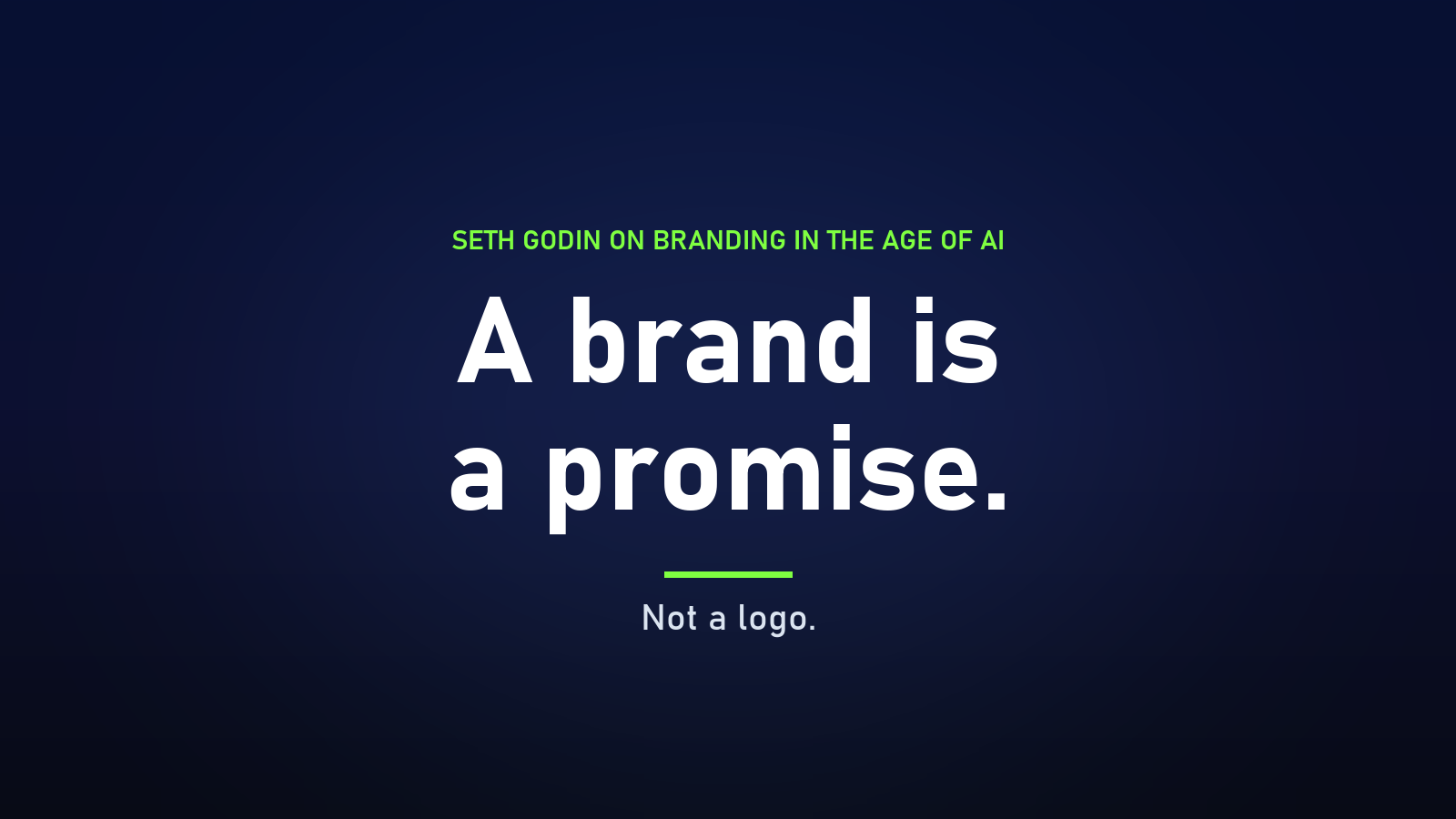
Godin puts it plainly: "A brand is not a logo. A brand is a promise." It's what people expect before they ever call you. His example: if a hotel chain started selling sneakers, nobody would know what to expect. If a famous sneaker company opened a hotel, everyone would.
Trust, then, is simple. Do people believe you'll keep your promise, and did you? Small promises kept when it's hard build more trust than big promises made easily. We learned the same lesson with our own AI, and wrote about it in Holding AI Accountable for Its Promises.
2. Aim for consistency, not authenticity
This is his most surprising point. Customers aren't paying for your mood on a given day. They're paying for you to show up the same way every time: the same care, the same honesty, the same standard.
He tells the story of a heating technician who put on slippers before going into his basement, then handed him a list of 25 neighbors who had agreed to vouch for the company. He hired them on the spot. Not because of a slogan, but because every detail said: we're professionals, and we care.
3. Give people something worth repeating
Most growth comes from customers talking about you, not you talking about yourself. But they need something to say. Godin points to a New York restaurant famous for huge shared portions, heavy garlic and reservations only for groups of six or more. Every visit became a story people retold the next day.
Ask yourself what a happy customer would tell a friend about you. If the honest answer is "they were fine," that's the thing to work on.
4. Use AI to get better, not just cheaper
Godin sees two paths. Most businesses will use AI to cut costs and do the same work with fewer people. That's a race to the bottom. The better path is using AI to make the experience better than anyone else's.
His sharpest example is the phone. When a customer has a problem and gets a recording that says to leave a message, the business has just told them exactly where they rank. For a small business, AI done well works the other way: every call and text gets a real answer right away, and a person picks it up from there.
5. Measure trust, not attention
Follower counts are easy to count and mostly beside the point. Godin notes that a huge following can sell surprisingly little. The numbers that matter are the ones tied to trust and action: who keeps coming back, who refers a friend, who replies when you reach out.
What to do this week
Write your promise in one sentence. What should every customer expect from you, every time?
Walk through every place a customer meets you: your phone, your texts, your website, your reviews. Does each one keep that promise?
Pick one thing worth repeating, something small and specific that people would tell a friend about.
Make sure no customer hits a dead end. If calls go to voicemail after hours, that's the first fix.
Choose one number that reflects trust, like repeat customers or referrals, and watch it instead of likes.
Sources
Godin, S. (2026). How to Build a Remarkable Brand in the Age of AI. The Entrepreneur's Studio podcast, hosted by Chris Allen. https://www.youtube.com/watch?v=zFHzTy7XLbM
LinkedIn and Facebook do not allow a prefilled caption, so we copy ours to your clipboard and open the composer. Paste to use it.